The Riedel

Both are machine-made in Bavaria and both go in the dishwasher. One is built around the shape of the bowl, the other around surviving the week.
Tap either one to check today’s price.
The Riedel
The Schott Zwiesel

Zwiesel Glas has the edge on 2 of 9 lines, Riedel on 0, 4 even.
| Feature | Riedel | Zwiesel Glas |
|---|---|---|
| Glass | Crystal glass | Tritan crystal glass, lead-free, with titanium and zirconium oxide |
| MadeEven | Machine-made in Bavaria, Germany | Made in Germany (Zwiesel, Bavaria) |
| Bowl | Diamond-shaped, with sharp angles | Tall bowl with a crisp angular contour |
| Capacity | About 28 oz | About 19 oz |
| HeightEven | About 9.7 in | About 9.6 in |
| DishwasherEven | Safe | Safe |
| Chips and breakage | Standard machine-made crystal glass | Tritan, made to resist breakage, chips and scratches (the edge) |
| SetEven | 4 glasses (sold as pay 3, get 4) | 4 glasses |
| Price per glass | About $22 | About $17 (the edge) |
The verdict
Buy the Riedel Extreme if you drink big reds and want a large, striking bowl for them. Buy the Zwiesel Glas Pure for glasses used and washed every night, at a lower price per glass and with better resistance to chips.
The wine glass for every night of the week.The crystal that leaves the lead out.The red wine glass, Bordeaux or Burgundy.
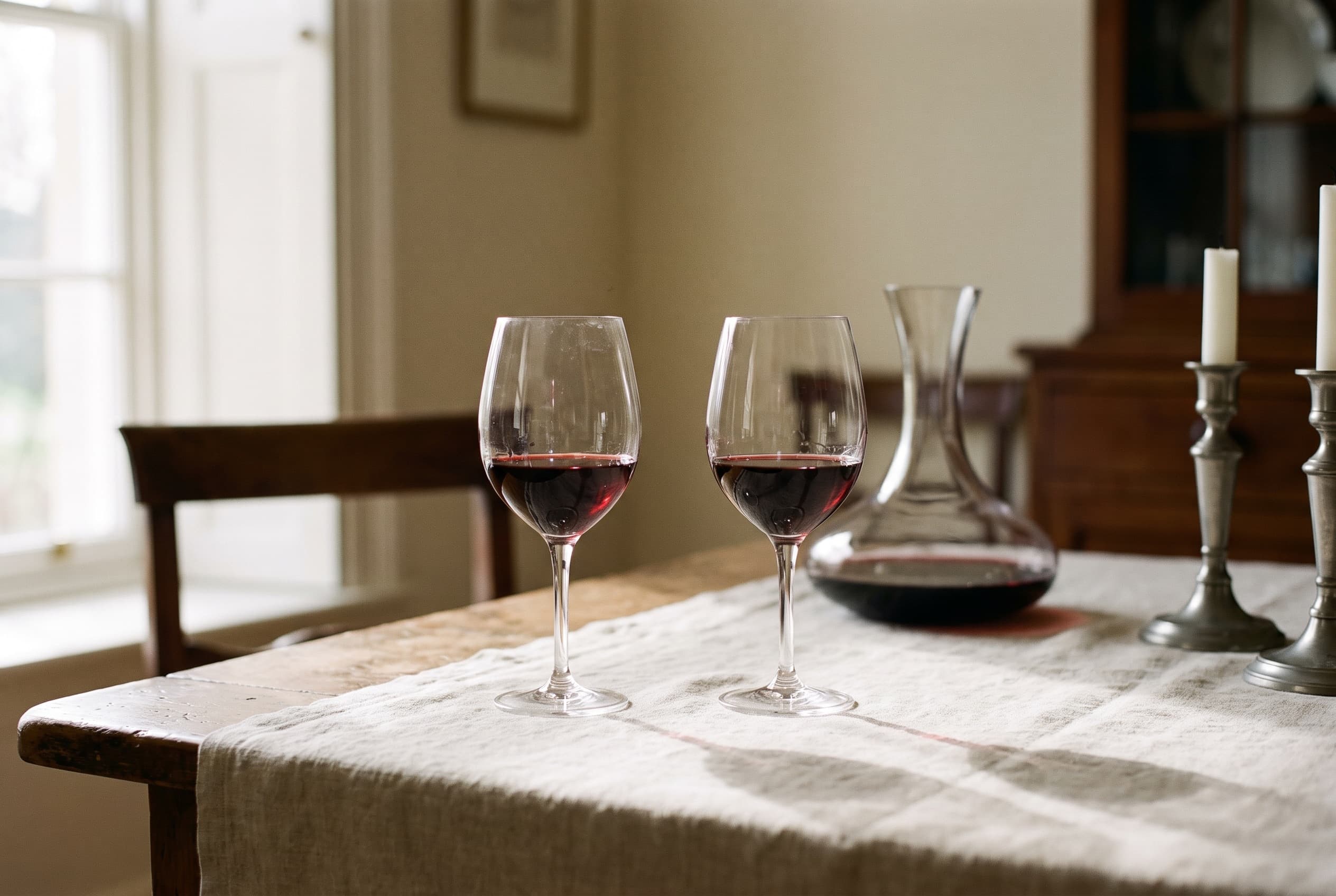
Riedel and Schott Zwiesel are the two names most people find when they go looking for better everyday wine glasses. Riedel, based in Kufstein, Austria, built its reputation on shaping a glass to a grape. Schott Zwiesel, from the glassworks in Zwiesel in the Bavarian Forest, built its reputation on Tritan, a lead-free crystal glass made to stand up to restaurants and dishwashers.
The fair comparison is between their machine-made red wine glasses sold in sets of four: Riedel's Extreme Cabernet and the Pure Cabernet from Zwiesel Kristallglas, the company behind Schott Zwiesel, which now sells its Pure collection under the Zwiesel Glas name. Both are made in Bavaria. Both are dishwasher safe. They cost within a few dollars a glass of each other.
What separates them is emphasis. The Riedel is larger and more dramatic, a glass for big reds. The Zwiesel is a little smaller, a little cheaper and made of a glass designed to shrug off chips. For a house that uses its glasses every night, that tends to matter more.
A large, angular Cabernet glass from the family that made grape-specific glassware a category.
Extreme is one of Riedel's machine-made collections, reintroduced in 2018 and aimed at big New World reds. The Cabernet glass has a diamond-shaped bowl with a wide surface, holds about 28 ounces and stands about 9.7 inches tall. Riedel says it is machine-made from crystal glass in Bavaria, and like all Riedel glasses it is rated dishwasher safe.
The set of four is sold as a pay-three-get-four pack, which is the reason it is priced close to the Zwiesel. It gives a Cabernet, Bordeaux or Malbec a lot of room, and at a table it looks like a considered choice.
The size is also the objection. It needs a tall cupboard shelf and room in the top rack, and a normal pour looks lost in it. Skip it if your household drinks mostly white wine or lighter reds, or if the glasses get knocked about.
The catch. Large and angular; it is a look people either like or do not, and it needs a tall shelf.
Where to buy
AmazonCheck price →A sturdier, slightly smaller everyday red glass, in the lead-free Tritan crystal that made Schott Zwiesel's name.
Pure is a modern Zwiesel collection with crisp contours, sold in seven stemmed glasses and four tumblers. The Cabernet glass holds about 19 ounces and stands about 9.6 inches tall. It is made in Germany of Tritan, the lead-free crystal glass Zwiesel Kristallglas developed in 2002 with the University of Erlangen-Nuremberg, which uses titanium and zirconium oxide in place of lead.
Tritan's point is resistance to breakage, chipping and scratches, and to the clouding that dishwashers cause. That is the practical case for the Zwiesel over the Riedel: in a house where glasses go straight from the table to the machine, fewer of them will need replacing, and each replacement costs less.
The bowl is not as big as the Riedel's, which suits most red wines and most pours. Skip it if you want a very thin, light glass for special bottles; the rim is sturdier than a handmade stem.
The catch. Sturdier and a little heavier in the hand than thin crystal, which is the price of its durability.
Where to buy
AmazonCheck price →Schott Zwiesel's sturdiest everyday line, at about $14 a glass.

Forté is the collection Schott Zwiesel describes as particularly sturdy and resilient, with clear, plain lines. This wine and water goblet holds about 17 ounces and stands about 8.9 inches tall, which fits more cupboards and more dishwashers than either glass above. It is machine-made Tritan crystal glass, made in Germany.
It is the glass for parties, patios and kitchens with children in them. The listing pitches it for full-bodied whites and young reds, and it works as a water glass on the nights nobody opens a bottle.
Skip it if you want a bowl large enough to swirl a full-bodied red properly. The Pure or the Riedel does that better.
The catch. A smaller, plainer glass; practical rather than graceful.
Where to buy
AmazonCheck price →A single machine-made crystal glass meant to replace the red and white sets altogether.

Neither Riedel nor Schott Zwiesel, but often the glass people choose once they have compared the two. Gabriel-Glas makes one universal shape, drawn in one piece of lead-free Austrian crystal, holding about 16 ounces. The StandArt edition is machine-made and dishwasher safe.
It is lighter and thinner than either glass above, and works for reds, whites and sparkling wine alike, so a cupboard needs one set instead of two.
At about $34 a glass, it costs twice as much as the Pure. Skip it if you like matched red and white glasses on a formal table.
The catch. Twice the price per glass of the Zwiesel, and thinner glass breaks more readily.
Where to buy
AmazonCheck price →All three names come from the same company, Zwiesel Kristallglas, in Zwiesel, Germany. Schott Zwiesel is its long-standing brand for machine-made glass such as Forté and Classico. Some collections, including Pure, are now sold under the Zwiesel Glas name. The glass and the factory are the same.
Both makers say their glasses are dishwasher safe. Use the top rack, keep stems from touching, and let them cool before unloading. Hard water, not the glass, causes most clouding; a rinse aid helps.
For everyday use, Schott Zwiesel's Tritan glasses are more durable and a little cheaper. Riedel's strength is bowl shape, and the Extreme Cabernet gives big reds more room.
Yes, both are brands of Zwiesel Kristallglas in Zwiesel, Germany. Some collections, such as Pure, now carry the Zwiesel Glas name.
Tritan crystal glass is lead-free, using titanium and zirconium oxide instead. Riedel describes the Extreme as crystal glass but does not state the formula on its product page.
Yes. Riedel rates all its glasses dishwasher safe, and Tritan was developed for dishwasher durability.
Both in Bavaria, Germany. Riedel says the Extreme is machine-made there, and the Zwiesel Glas Pure is made in Germany.
 GlassChampagne Flute vs Coupe (Saucer): Which to Buy
 GlassLead-Free Crystal Wine Glasses and Decanters
 GlassBest Red Wine Glasses: Bordeaux and Burgundy Shapes
 GlassBest Highball and Collins Glasses for Home
 GlassThe Best Water Carafe and Glass Pitcher for the Table
 GlassBest Champagne Glasses: Flute, Coupe or Tulip
 GlassBest Everyday Drinking Glasses for Water and Juice
 GlassThe Best Martini, Coupe and Nick and Nora Glasses
The Bonwits Letter
What is worth buying for the house this week, what is actually on sale, and what to skip. Short, and never sponsored.

