The Riedel

The comparison most people search for is between two brands of one company. Riedel bought Spiegelau in 2004. What is left to compare is the glass in your hand, and there the difference is real.
Tap either one to check today’s price.
The Riedel
The Spiegelau

Spiegelau has the edge on 2 of 10 lines, Riedel on 0, 6 even.
| Feature | Riedel | Spiegelau |
|---|---|---|
| OwnershipEven | Riedel Glas, Kufstein, Austria; family owned since 1756 | Owned by Riedel since 2004, via Bayerische Glaswerke; trades as Riedel Glass Works |
| Where madeEven | Machine-made in Bavaria, Germany (maker's page) | Germany (listing); the Spiegelau village works closed in 2008 |
| ProcessEven | Machine-made; Riedel's handmade glasses are mouth-blown in Kufstein | Machine-made, described by Spiegelau as premium machine-made |
| Glass | Crystal glass; lead content not stated on the maker's page | Lead-free crystal glass (listing) |
| DishwasherEven | Safe, per Riedel | Safe, per Spiegelau |
| Break resistanceEven | No claim made | No claim made; Spiegelau says engineered for lasting durability through frequent washing |
| Bowl | Diamond-shaped Cabernet bowl, about 28 oz | Tapered universal bowl, about 19 oz (550 ml) |
| Height | About 9.7 in | About 9.3 in (237 mm) (the edge) |
| SetEven | 4 glasses, sold as pay 3 get 4 | 4 glasses |
| Price per stem | About $22 | About $17.50 (the edge) |
The verdict
Buy the Riedel Extreme if you drink big reds and want the grape-specific bowl and the name on the box. Buy the Spiegelau Definition Universal if you want one glass for red and white, made by the same group in the same country, at about $5 a stem less and a size that fits the cupboard.
The glass for white wine.The crystal that leaves the lead out.The red wine glass, Bordeaux or Burgundy.
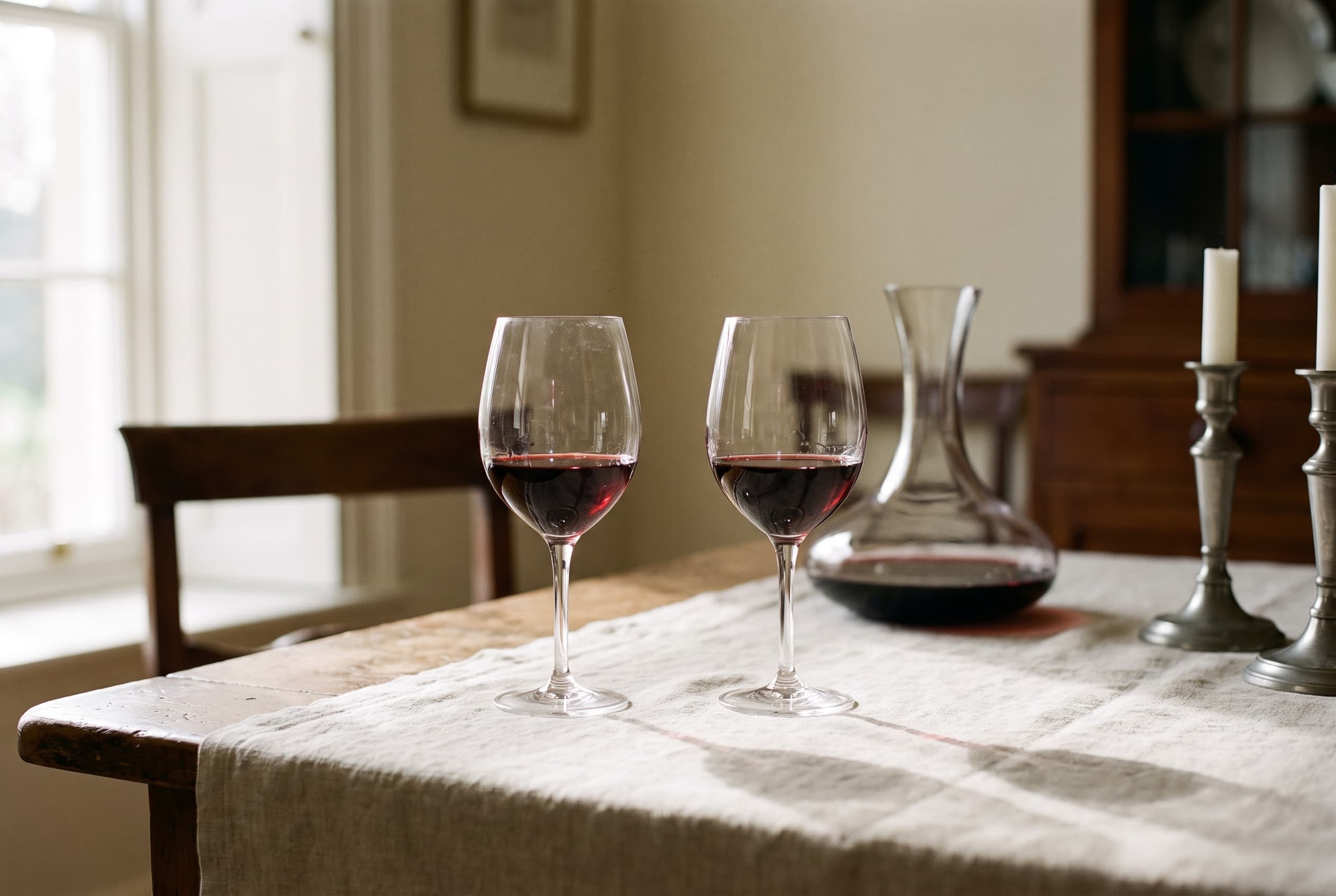
Riedel and Spiegelau are sold as rivals, and were. Riedel is the Austrian family firm from Kufstein in the Tyrol, in its eleventh generation, that turned the idea of a glass shaped to a grape into a category. Spiegelau is the Bavarian Forest glassworks first recorded in 1521 and named Kristallglasfabrik Spiegelau in 1926. On 17 September 2004 Riedel bought 100 percent of F.X. Nachtmann, and Spiegelau with it, and today the three brands trade as Riedel Glass Works. Spiegelau's own village glassworks stopped production in 2008; the brand is now made at the group's other plants in Bavaria, the Tyrol and Upper Austria.
So the question is not which company is better. It is how the group has split its range. Riedel is the name on the grape-specific shapes, the handmade Sommeliers series and the big machine-made collections. Spiegelau is the restaurant and everyday brand: machine-made, sold in sets, priced a step lower, with fewer shapes and a durability pitch. Riedel's machine-made glasses, including the Extreme below, are made in Bavaria; so is Spiegelau's Definition. Both go in the dishwasher.
To compare like with like, the two glasses set side by side are both machine-made red wine glasses sold on Amazon by Amazon.com in sets of four: Riedel's Extreme Cabernet, a 28 ounce diamond-shaped bowl, and Spiegelau's Definition Universal, a 19 ounce glass for red and white. Riedel's Vinum, Ouverture and Veritas and Spiegelau's Style, Willsberger and Authentis are on Amazon only through third party resellers at the moment, which rules them out here. Two Zwiesel glasses from the other big German maker show what the same money buys outside the group.
A large, angular Cabernet glass from the family that made grape-specific glassware a category, machine-made in Bavaria.
Extreme is one of Riedel's machine-made collections, reintroduced in 2018 and aimed at big New World reds. The Cabernet glass has a diamond-shaped bowl with a wide surface, holds about 28 ounces and stands about 9.7 inches tall. Riedel says it is machine-made from crystal in Bavaria, Germany, and that all Riedel glasses are dishwasher safe.
The set of four is sold as a pay-three-get-four pack, which is what brings it within $5 a stem of the Spiegelau. It gives a Cabernet, Bordeaux or Malbec a great deal of room, and on a table it reads as a decision rather than a default.
The size is also the objection. It needs a tall shelf and room in the top rack, and a normal pour looks lost in it. Skip it if your household drinks mostly white wine or lighter reds, or if you want one glass for everything, which is the Spiegelau's job.
The catch. Large and angular; it is a look people either like or do not, and it needs a tall shelf.
Where to buy
AmazonCheck price →The group's one-glass-for-everything, 19 ounces of lead-free crystal made in Germany, at about $17.50 a stem.
Definition is Spiegelau's newer, thinner machine-made line, designed in 2021, and the Universal is its all-purpose glass: a tapered bowl of 550 milliliters, about 19 ounces, 237 millimeters tall and 92 millimeters across at the widest point. The Amazon listing says it is made in Germany from lead-free crystal, and Spiegelau's own page calls it premium machine-made, dishwasher safe, and engineered to last through frequent washing.
It is the glass for a household that wants one shape on the shelf. The listing pitches it for Pinot Noir, Merlot, Cabernet, Chardonnay and Sauvignon Blanc alike, which is what a universal glass is for, and at about 9.3 inches it fits a standard top rack and most cupboards. The set of four is sold by Amazon.
Skip it if you want the dramatic Cabernet bowl; it is a quieter, narrower glass and a Bordeaux will not open up in it the way it does in the Riedel. Spiegelau makes a Definition Bordeaux glass, but it is not sold on Amazon by Amazon or the brand at the moment.
The catch. A universal shape is a compromise; a big red gets less room than in a true Bordeaux bowl.
Where to buy
AmazonCheck price →A proper tall Bordeaux bowl from the other big German maker, in Tritan crystal glass, for about $13 a stem.

Zwiesel Kristallglas, from the town of Zwiesel in the same Bavarian Forest where Spiegelau began, is the German maker Riedel did not buy. Pure is its modern line, recognizable by the angular shoulder where the bowl meets its upright sides. The Bordeaux holds about 23 ounces and stands 10.5 inches tall, and the rim tapers in to hold the aroma of a Cabernet or a Merlot.
The glass is Zwiesel's Tritan crystal, a lead-free glass made in Germany with titanium and zirconium in place of lead. The practical result is a glass that goes through the dishwasher for years without clouding and does not chip at the rim as easily as ordinary glass. Amazon sells the pair directly.
Skip it if you want a traditional round bowl; the angled profile is a matter of taste. At 10.5 inches it is the tallest glass here.
The catch. At 10.5 inches it will not fit on the top rack of some dishwashers or in a low cabinet.
Where to buy
AmazonCheck price →Schott Zwiesel's sturdiest everyday line in Tritan, six glasses for about $14 each, sold by Amazon.

Forte is the collection Schott Zwiesel describes as particularly sturdy and resilient, with clear, plain lines. This wine and water goblet holds about 17 ounces and stands about 8.9 inches tall, which fits more cupboards and more dishwashers than any glass above. It is machine-made in Germany from Tritan crystal glass, the lead-free glass with titanium and zirconium oxide that Zwiesel built its reputation on.
It is the glass for parties, patios and kitchens with children in them, and it works as a water glass on the nights nobody opens a bottle. The listing suggests it for full-bodied whites and young reds.
Skip it if you want a bowl large enough to swirl a full-bodied red properly. The Riedel or the Pure does that better.
The catch. A smaller, plainer glass; practical rather than graceful.
Where to buy
AmazonCheck price →Riedel is Tiroler Glashütte GmbH of Kufstein, Austria, run by Georg J. Riedel and his son Maximilian in the tenth and eleventh generations of a family that has made glass since 1756. On 17 September 2004 it took over all of F.X. Nachtmann Bleikristall of Neustadt an der Waldnaab, and with it Nachtmann's rival Spiegelau. Nachtmann and Spiegelau sit under Bayerische Glaswerke, and the three brands trade together as Riedel Glass Works, about 1,100 people in all.
Nachtmann is the group's tableware and gift brand. Spiegelau is the restaurant and everyday stemware brand. Riedel keeps the grape-specific shapes and the handmade work.
Riedel's handmade glasses, the Sommeliers and Superleggero series among them, are mouth-blown at the Kufstein works in Austria, where visitors can watch from a gallery. Its machine-made collections, including the Extreme, are made in Bavaria, Germany, according to Riedel's own product pages. Spiegelau's village glassworks, first recorded in 1521, stopped production in 2008, and the brand is now made across the group's plants in Bavaria, the Tyrol and Upper Austria; the Definition listing says Germany. Nachtmann's own Neustadt plant stopped making glass in 2002.
In short: a machine-made Riedel and a Spiegelau may come from the same German factory. The handmade Riedel is the only one here that is Austrian.
Crystal glass is an old trade term for brilliant glass. It once meant lead crystal; today most everyday stemware, including the glasses here, is lead-free crystal glass that gets its brilliance from other oxides. Spiegelau's Amazon listing states lead-free crystal. Riedel describes the Extreme as crystal and its page does not state lead content. Zwiesel's Tritan is a lead-free crystal glass with titanium and zirconium oxide, made to resist chipping and dishwasher clouding, and it is the one of the three with a published durability claim.
Every glass here is rated dishwasher safe by its maker. The things that break them are the same regardless of brand: twisting the bowl against the stem when drying, forcing a bowl over a rack prong, and letting glasses touch during the cycle. Load them with space around each one and pull them out before the dry cycle bakes on spots. For the comparison with Zwiesel on its own, see our Riedel versus Schott Zwiesel guide.
Yes. Riedel took over F.X. Nachtmann on 17 September 2004 and acquired Spiegelau with it. The three brands trade as Riedel Glass Works.
It is made by the same group to a lower price, with fewer shapes and a focus on restaurants and everyday use. For an all-purpose glass that goes in the dishwasher, the Spiegelau Definition Universal does the job for about $5 a stem less. For the grape-specific bowls and the handmade series, Riedel is the only name in the group that makes them.
Spiegelau's own glassworks in Bavaria closed in 2008. The brand is now made at the Riedel group's plants in Bavaria, the Tyrol and Upper Austria; the Definition Universal listing says Germany.
Handmade Riedel glasses are mouth-blown in Kufstein, Austria. Machine-made collections such as Extreme, Vinum and Ouverture are made in Bavaria, Germany, according to Riedel.
Riedel describes its machine-made glasses as crystal glass and its Extreme page does not state lead content. Spiegelau's Definition listing states lead-free crystal, and Zwiesel's Tritan is a lead-free crystal glass by formulation.
Yes, both makers rate them dishwasher safe. Leave space between glasses and do not twist the bowl against the stem.
 GlassBest Everyday Drinking Glasses for Water and Juice
 GlassChampagne Flute vs Coupe (Saucer): Which to Buy
 GlassRiedel vs Schott Zwiesel: Everyday Wine Glasses Compared
 GlassLead-Free Crystal Wine Glasses and Decanters
 GlassBest Red Wine Glasses: Bordeaux and Burgundy Shapes
 GlassBest Highball and Collins Glasses for Home
 GlassThe Best Water Carafe and Glass Pitcher for the Table
 GlassBest Champagne Glasses: Flute, Coupe or Tulip
The Bonwits Letter
What is worth buying for the house this week, what is actually on sale, and what to skip. Short, and never sponsored.


