The Tencel lyocell

Both start as wood pulp and end as a silky filament. The difference is the chemistry in between, and the word the law lets the label use.
Tap either one to check today’s price.
The Tencel lyocell
The bamboo viscose

Sijo has the edge on 3 of 11 lines, Cozy Earth on 2, 1 even.
| Feature | Sijo | Cozy Earth |
|---|---|---|
| Price on Amazon | About $157 for a queen (the edge) | About $277 for a queen |
| Fiber | 100% Tencel lyocell from eucalyptus | 100% viscose rayon from bamboo |
| Process | Lyocell: amine oxide solvent, about 99% recovered and reused (the edge) | Viscose: sodium hydroxide and carbon disulfide |
| Weight | 130 grams per square meter, light | Not stated on the listing; heavier, settles over the body |
| Feel | Smooth, cool, light, slight sheen | Silky, heavy drape, cool on contact |
| Wet strength | Lyocell keeps most of its strength wet (the edge) | Viscose weakens when wet; wash gently |
| Care | Machine wash cold, gentle; dry low; no bleach | Machine wash cold, gentle detergent; no softener or bleach; remove damp |
| Certifications (these sets) | OEKO-TEX Standard 100 Class 1; Asthma and Allergy Friendly | OEKO-TEX Standard 100 (per Cozy Earth's site) |
| Fitted pocket | 16 in | Up to 20 in (the edge) |
| Warranty | Not stated on the listing | 10 years against pilling, rips and workmanship defects (the edge) |
| Made inEven | Not stated on the listing | Not stated on the listing |
The verdict
Buy the Tencel if you want the smooth, cool, drapey hand with a cleaner process and a fiber that survives ordinary laundry better. Buy the Cozy Earth bamboo if you want the heavier, silkier drape and a 10 year warranty, and will wash it cold and dry it low.
The sheets for hot sleepers.The linen sheets for people who sleep warm.
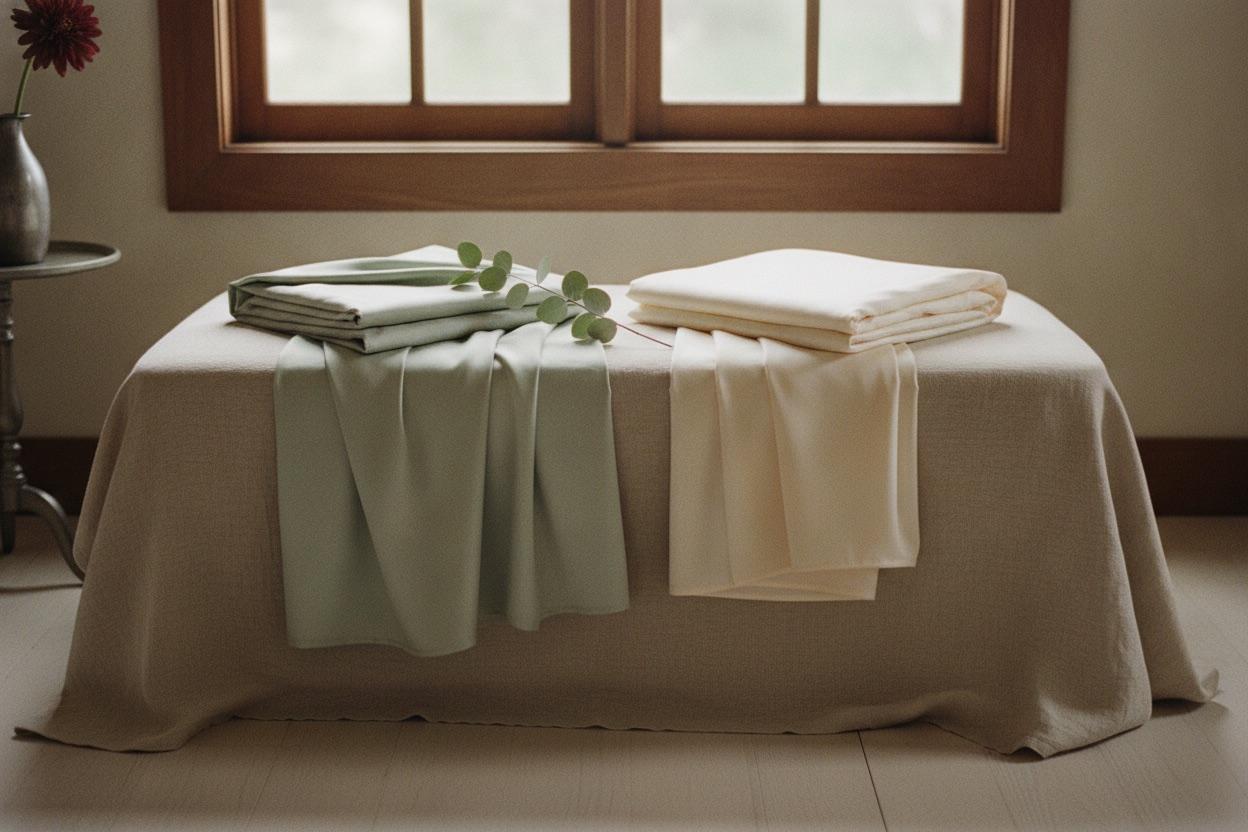
Tencel and bamboo sheets are closer cousins than the marketing admits. Neither is a fiber picked from a plant. In both cases a plant is pulped, the cellulose is dissolved, and the solution is pushed through a spinneret into new filament. Tencel is Lenzing's trade name for lyocell, usually spun from eucalyptus or beech. Most bamboo sheets are viscose rayon spun from bamboo pulp. Lyocell and viscose are two routes to the same family of cloth, which is why they feel so alike: smooth, cool on contact, heavy in the drape.
The routes differ in what they leave behind. Viscose dissolves the pulp with sodium hydroxide and carbon disulfide, and the wastewater is the long standing complaint against it. Lyocell dissolves the pulp directly in an amine oxide solvent, and the process literature puts recovery and reuse of that solvent at about 99 percent, which is what a closed loop means here. Lyocell is also generally stronger when wet. The Federal Trade Commission adds a rule to the vocabulary: a textile can be called bamboo only if it is made directly from bamboo fiber. Rayon spun from bamboo pulp must be labeled rayon, or viscose, made from bamboo.
To compare like with like, the two sets side by side here are Sijo's AiryWeight, 100 percent Tencel lyocell from Austrian eucalyptus, sold on Amazon by Sijo Home, and Cozy Earth's bamboo set, 100 percent viscose from bamboo, sold by Cozy Earth. Three further sets widen the picture: Cariloha's Retreat, which is lyocell made from bamboo and so blurs the whole argument, and Brooklinen's cotton percale and sateen for anyone who decides the regenerated fibers are not for them.
A light, cool Tencel sheet from a eucalyptus specialist, certified to the strictest OEKO-TEX class and about $120 less than the bamboo set beside it.
Sijo makes most of its bedding from Tencel lyocell, and the AiryWeight set is the plain version: 100 percent lyocell derived from eucalyptus grown in Austria, sourced from Lenzing's Tencel and PEFC certified forests. The queen set is a fitted sheet with a 16 inch pocket, a flat sheet and two pillowcases. The cloth weighs 130 grams per square meter, which is light for a sheet, and that lightness is the point. It is cool to the touch and stays cool, and Sijo's figure for moisture absorption is 70 percent more than cotton.
The set is certified to OEKO-TEX Standard 100 Class 1, the class written for products meant for babies, and carries the Asthma and Allergy Friendly mark. Sijo says it is free from bleach and dyes in the Snow color. The maker's claim that it keeps its smoothness without pilling after 2,000 abrasion revolutions is a lab figure, but it fits what lyocell does: unlike viscose, it keeps most of its strength when wet, so it tolerates an ordinary gentle cycle.
Skip it if you want weight. The heavy, pooling drape that people love about bamboo viscose is not what this is. Skip it too if you want a deep pocket beyond 16 inches.
The catch. Light rather than heavy, and lyocell clings and creases more than cotton sateen.
Where to buy
AmazonCheck price →The best known bamboo sheet, labeled correctly as viscose from bamboo: silky, heavy, cool on contact, and backed by a 10 year warranty.
Cozy Earth's set is 100 percent viscose from bamboo, the label the FTC requires and the one Cozy Earth uses. The queen set is a flat sheet, a fitted sheet and two pillowcases, cut oversized, with a fitted sheet that stretches to mattresses 20 inches deep. The cloth is what people picture when they say bamboo sheets: slippery smooth, with a heavy drape that settles over the body and a cool first touch. Cozy Earth's site lists OEKO-TEX Standard 100 for the fabric.
Viscose is weaker wet than lyocell, which is why the care instructions are stricter. Cozy Earth says machine wash cold with a gentle detergent, no fabric softener or bleach, shake out the wrinkles between washer and dryer, and remove the sheets while slightly damp. Do that and the warranty is the best in the category: 10 years on bedding, covering pilling, abnormal rips and tears and workmanship defects, resolved with a replacement rather than a refund.
Skip it if your laundry habit is hot water and a high dryer; this is the fiber that punishes it. Skip it if you want the cleaner solvent story, which is what the Tencel and the Cariloha Retreat are for.
The catch. The most expensive set here apart from the Cariloha Retreat, and the fiber asks for the gentlest laundry.
Where to buy
AmazonCheck price →Lyocell made from bamboo pulp: the Tencel process applied to the bamboo plant, woven as a sateen, from a bamboo bedding specialist.

If the Tencel versus bamboo question feels like a false choice, this is the proof. Cariloha's Retreat is 100 percent bamboo lyocell, meaning bamboo pulp dissolved by the lyocell process rather than the viscose one, then woven as a sateen. It has the fluid drape and sheen of the Cozy Earth set with the wet strength and cleaner solvent chemistry of the Sijo. The fitted sheet has 18 inch pockets with corner bands and a labeled border so it goes on the right way first time, and the set is OEKO-TEX Standard 100 certified.
Cariloha has sold bamboo viscose bedding for years and calls Retreat its most refined line. The price reflects that: at about $339 it is the most expensive set on this page, and the colors run to coastal grays and blues rather than plain white.
Skip it if you want white, or if you simply want the bamboo drape at a sane price, in which case Cariloha's own Aloha Soft viscose line is a fraction of the cost. This is the pick for someone who wants the fiber argument settled in one set.
The catch. The highest price here, and the listing color is Coastal Gray rather than white.
Where to buy
AmazonCheck price →The cotton answer to both regenerated fibers: a 270 thread count long staple percale that breathes all night and forgives any laundry.

Both Tencel and bamboo viscose feel cool because a smooth filament pulls heat from the skin on contact. Over a whole night, many hot sleepers do better with cotton percale, a plain weave of spun cotton that lets air through and does not cling. Brooklinen's Classic Percale is 100 percent long staple cotton woven at 270 threads per inch, certified to OEKO-TEX Standard 100, and sold on Amazon by Brooklinen itself.
Percale is crisp and matte where lyocell and viscose are silky and lustrous, and it softens over the first dozen washes rather than arriving soft. The practical advantage is the wash: warm or hot water, a normal dryer, no special handling, for years.
Skip it if what you want is the slippery drape. Percale will never give you that, and it wrinkles more than either regenerated fiber.
The catch. Crisp and wrinkled rather than smooth and drapey; the opposite of the bamboo feel.
Where to buy
AmazonCheck price →If the draw of Tencel or bamboo is smoothness and sheen, this is the cotton that has it: a 480 thread count long staple sateen.

Cotton can be smooth too. Weave it as a sateen, with each thread floating over several before passing under one, and the surface turns soft and faintly lustrous. Brooklinen's Luxe Sateen is 100 percent long staple cotton at a 480 thread count, OEKO-TEX Standard 100 certified, and made in Portugal according to Brooklinen's site. It is soft from the first night and drapes more than percale.
Against the two regenerated fibers it is a little less slippery, a little warmer in the hand, and far easier to live with in the laundry, because it is still cotton. Brooklinen asks for cold water and a low dryer to keep the surface smooth, but a mistake will not ruin it.
Skip it if you sleep very hot. Sateen holds more warmth than percale, and the floats that make it smooth are what pill first.
The catch. Warmer than percale, and the smooth surface shows pilling sooner.
Where to buy
AmazonCheck price →Viscose and rayon are the same thing: cellulose from wood or bamboo pulp, dissolved in sodium hydroxide and carbon disulfide and spun back into fiber. Lyocell is a newer route to the same result that dissolves the pulp directly in an amine oxide, N-methylmorpholine N-oxide, which is recovered and reused at about 99 percent and does not involve carbon disulfide. Tencel is Lenzing's brand name for its lyocell and modal fibers; other mills make lyocell without the trademark. Either process can start from eucalyptus, beech or bamboo. The finished filament does not remember which plant it came from, so a bamboo lyocell and a eucalyptus lyocell are far closer to each other than either is to bamboo viscose.
The FTC's position is about the label, not about quality. A textile can be called bamboo only if it is made directly from bamboo fiber. Viscose spun from bamboo pulp must be called rayon, or viscose, made from bamboo. Lyocell is a recognized generic fiber name under the textile labeling rules, so a lyocell sheet should say lyocell, whatever plant it started as.
Both fibers feel cool on first touch because the smooth surface conducts heat away from the skin quickly. Both absorb moisture well; lyocell in particular wicks and releases it. The difference over a night comes down to weight and weave. Sijo's 130 gram cloth is light and lets heat out; Cozy Earth's heavier viscose drape settles against the body and, owners report, can hold warmth. For a hot sleeper the lighter lyocell or a cotton percale is the safer choice. For someone who sleeps cold and wants to be wrapped, the bamboo viscose is the one.
Viscose loses a large share of its strength when wet, which is why bamboo viscose makers say cold water, gentle detergent, no bleach, no fabric softener, a low dryer, and remove while damp. Lyocell keeps most of its strength wet, so it tolerates a normal gentle cycle, though both fibers dislike high heat and softener. Do not overload the machine with either; the sheets abrade against each other. Pull them from the dryer slightly damp and make the bed, and most creases fall out on their own.
No, but they are relatives. Tencel is Lenzing's lyocell, usually from eucalyptus. Most bamboo sheets are viscose rayon from bamboo pulp. Both are regenerated cellulose; the chemistry and the plant differ.
Both feel cool on contact. Over a night, the lighter Tencel set here breathes more, while the heavier bamboo viscose drape can hold warmth. Hot sleepers should lean toward Tencel or a cotton percale.
In ordinary laundry, lyocell, because it keeps most of its strength when wet and viscose does not. Washed cold and dried low, good bamboo viscose lasts years, and Cozy Earth warrants its set for 10 years.
Because the FTC requires it. A textile may be called bamboo only if it is made directly from bamboo fiber. Fiber regenerated from bamboo pulp must be labeled rayon or viscose made from bamboo.
The lyocell process recovers and reuses about 99 percent of its solvent and does not use carbon disulfide, which is the main complaint against viscose. Bamboo as a crop grows fast with little irrigation, but the viscose chemistry undoes much of that advantage. Bamboo lyocell, like Cariloha's Retreat, gets the crop and the cleaner process together.
Less than cotton percale, about the same as bamboo viscose. The drape hides creases, and taking them from the dryer slightly damp does the rest.
 LinensBrooklinen vs Cozy Earth Sheets: Sateen Compared
 LinensLinen vs Cotton Sheets: Feel, Cooling, Durability, Price
 LinensEgyptian Cotton Sheets: Real Ones, and How to Tell
 LinensBest Flannel Sheets: Weight, Pilling and Where Made
 LinensBest Linen Sheets: Pure Flax Linen Sheet Sets Compared
 LinensBest Pillows for Neck Pain and Neck Support, by Position
 LinensBest Linen Placemats and Table Runners
 LinensBest Bed Sheets: Percale, Sateen and Linen Compared
The Bonwits Letter
What is worth buying for the house this week, what is actually on sale, and what to skip. Short, and never sponsored.

