Bonwits

The cutting board your knives deserve.

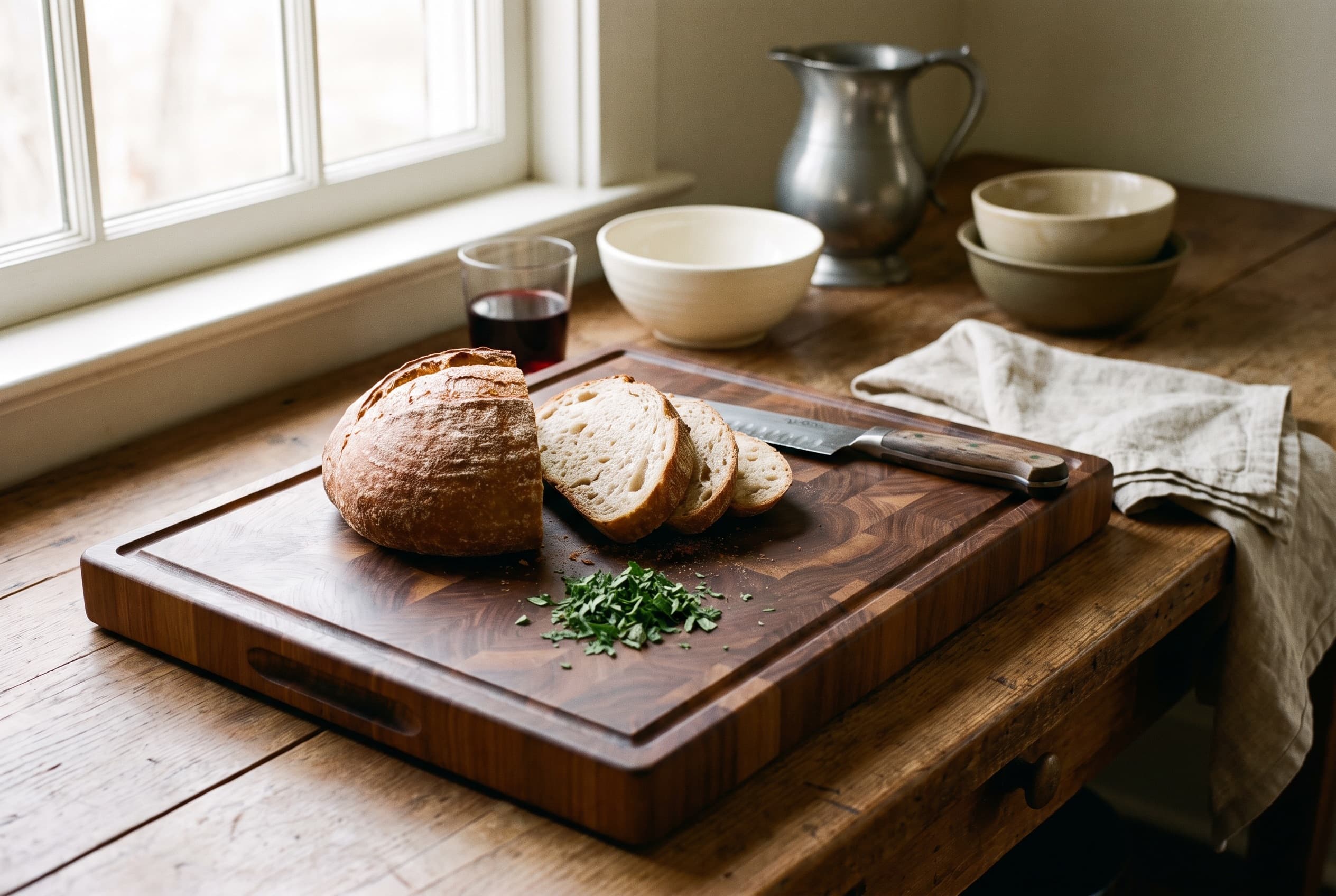
A good board is kind to a knife, stays flat for years, and asks for a little oil once a month. The big decision is which way the grain runs.

By the Bonwits editors
Updated September 25, 2026
5 picks
Save to Pinterest
The cutting board your knives deserve

The short list.

5 picks. Tap any to check today’s price.

  1. The honest entry point
    Epicurean Kitchen Series Cutting Board, 17.5-Inch × 13-Inch, Natural
  2. End grain on a budget
    Ironwood Gourmet Charleston End Grain Board with Channel, Acacia Wood Brown 20 x 14 Inches
  3. The one to buyOur pick
    Teakhaus Large Cutting Board with Handles & EON Oil Set, 20 x 15 x 1.5 in
  4. The handsome one
    Virginia Boys Kitchens Black Walnut Wood Cutting Board with Juice Well (17x11)
  5. The block to hand down
    John Boos Block CCB183-S Classic Reversible Maple Wood End Grain Chopping Block, 18 Inches x 18 Inches x 3 Inches

Before you buy

Read this first.

Picks
5
Price range
$40 to $277
Updated
September 25, 2026

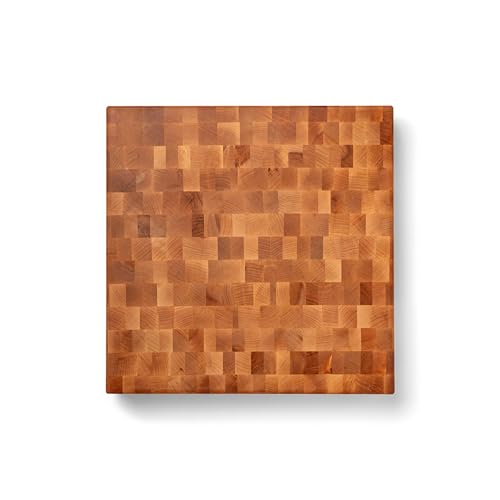
Wood boards come in two constructions. Edge grain boards are strips of wood glued side by side with the long grain facing up; the knife cuts along the fibers. End grain boards are short blocks glued with the ends of the fibers facing up, like a checkerboard; the knife slips between the fibers, which close up again afterward.

End grain is the gentler surface for a sharp knife and the more handsome block on a counter. It is also thicker, heavier, dearer and thirstier, drinking far more oil, and it has many more glue joints to fail if it is left wet. Edge grain is lighter, cheaper, easier to lift to the sink and, according to America's Test Kitchen's testing, needs much less upkeep. For most kitchens an edge grain board is the one that gets used.

The five boards below run from a dishwasher-safe composite to a three-inch maple block, with teak, walnut and acacia in between. Every one of them should last many years if it is never soaked and never put in the dishwasher, the Epicurean excepted.

What we judged on.

4 tests, applied to every pick below

  1. 01

    Grain construction

    End grain or edge grain, stated plainly, since it decides weight, upkeep and how the board treats a knife.

  2. 02

    Size you can work on

    Around 18 by 12 inches is the smallest board that holds a chopped onion and a whole chicken. Bigger is better if the counter allows.

  3. 03

    Upkeep

    How much oiling it needs and whether it can go in the dishwasher, from the maker and independent testing.

  4. 04

    Maker and origin

    Where the wood is from and where the board is made, as the maker or listing states it.

No. 01The honest entry point

Epicurean

Epicurean Kitchen Series Cutting Board, 17.5-Inch × 13-Inch, Natural

Not wood exactly, but a thin, light board that goes in the dishwasher and never needs oil.

Epicurean Kitchen Series Cutting Board, 17.5-Inch × 13-Inch, Natural
Price
About $40 (Amazon today: $39.99)
Made in
USA (Minnesota)
Keeps for
Many years; it scores but does not warp
Size
17.5 x 13 in
Material
Wood fiber composite
Heat
Resistant to 350°F
Care
Dishwasher safe, no oiling
Made in
USA

Epicurean boards are a composite of wood fiber and food-safe resin, pressed into a thin, dense sheet and made in the USA. The board is heat resistant to 350 degrees Fahrenheit, so it doubles as a trivet, and it has a hole for hanging.

It is the board to reach for with raw chicken, since it can go straight into the dishwasher. The surface is harder than wood, and it shows knife marks as fine scratches rather than healing over.

Skip it as your only board if you care about the feel of a knife on wood. It is thin and light, which is handy at the sink and less pleasant for a long session of chopping.

The catch. It scratches visibly with use and has none of the warmth or weight of a wood board.

No. 02End grain on a budget

Ironwood Gourmet

Ironwood Gourmet Charleston End Grain Board with Channel, Acacia Wood Brown 20 x 14 Inches

A large end grain acacia board with a juice channel for well under the price of a maple block.

Ironwood Gourmet Charleston End Grain Board with Channel, Acacia Wood Brown 20 x 14 Inches
Price
About $80 (Amazon today: $78.28)
Keeps for
Years, with regular oiling
Size
20 x 14 x 1.125 in
Construction
End grain acacia
Weight
6.6 lb
Juice channel
Holds up to 4 fl oz
Care
Hand wash, dry immediately, oil periodically

The Charleston is end grain acacia, 20 by 14 inches and just over an inch thick, with a channel around the edge that holds about 4 ounces of juice. At 6.6 pounds it is light for an end grain board, which makes it practical to carry to the table for carving.

Acacia is a hard, dense wood with strong contrast between light and dark grain, which gives the checkerboard a busy look. The maker says to hand wash, dry at once, never soak and oil it periodically.

Skip it if you want a board that will stay dead flat for decades. A thin end grain board is more likely to move with the seasons than a thick one. Buy the Boos if that matters.

The catch. Thin for end grain, and the maker does not say where it is made.

No. 03The one to buy

Teakhaus

Teakhaus Large Cutting Board with Handles & EON Oil Set, 20 x 15 x 1.5 in

The edge grain teak board that tops America's Test Kitchen's testing, needing the least upkeep of any they tried.

Teakhaus Large Cutting Board with Handles & EON Oil Set, 20 x 15 x 1.5 in
Price
About $115 (Amazon today: $114.00)
Keeps for
Many years; teak's natural oils resist water
Size
20 x 15 x 1.5 in
Construction
Edge grain teak, reversible
Wood
FSC-certified teak
Includes
EON conditioning oil
Care
Hand wash, not dishwasher safe

Teakhaus makes its boards from FSC-certified plantation teak, and this is its large edge grain board: 20 by 15 by 1.5 inches, reversible, with grip handles cut into the ends. It comes bundled with a bottle of the maker's EON conditioning oil, a blend of beeswax, coconut oil and orange oil.

America's Test Kitchen named the Teakhaus edge grain board its winner and praised the large size for being easy to lift while staying put. Its testers found the teak board soaked up only a fraction of the oil that end grain boards needed to stay waterproof. Teak's own oils do a lot of the work.

Skip it if you are particular about knife edges. America's Test Kitchen notes teak contains fine silica, which over long use wears a blade slightly faster than maple.

The catch. Teak's silica is slightly harder on knife edges than maple.

No. 04The handsome one

Virginia Boys Kitchens

Virginia Boys Kitchens Black Walnut Wood Cutting Board with Juice Well (17x11)

American black walnut, made in Virginia, dark enough to go from the counter to the table with the bread on it.

Virginia Boys Kitchens Black Walnut Wood Cutting Board with Juice Well (17x11)
Price
About $95 (Amazon today: $94.95)
Made in
USA (Virginia)
Keeps for
Many years, with regular oiling
Size
17 x 11 in
Wood
American black walnut
Features
Reversible, juice well
Finish
Pre-seasoned with fractionated coconut oil
Made in
Virginia, USA

Virginia Boys Kitchens makes its boards by hand in Virginia from American walnut and seasons them with fractionated coconut oil before they ship. This is a reversible 17 by 11 inch board with a juice well on one side.

Walnut is softer than maple, which makes it kind to a knife edge, and its dark color hides beet and berry stains that would show on a pale board. It is the board to put out with cheese or a loaf when people come over.

Skip it as your main board if you break down whole chickens or cook for a crowd. At 17 by 11 inches it is a size down from the Teakhaus.

The catch. Smaller than the other boards here, and walnut shows knife marks sooner than maple.

No. 05The block to hand down

John Boos

John Boos Block CCB183-S Classic Reversible Maple Wood End Grain Chopping Block, 18 Inches x 18 Inches x 3 Inches

Three inches of end grain maple from the American butcher block house, made to stay on the counter for good.

John Boos Block CCB183-S Classic Reversible Maple Wood End Grain Chopping Block, 18 Inches x 18 Inches x 3 Inches
Price
About $280 (Amazon today: $276.95)
Made in
USA (Effingham, Illinois)
Keeps for
Decades, with monthly oiling
Size
18 x 18 x 3 in
Construction
End grain hard maple, reversible
Features
Recessed finger grips
Care
Hand wash only; oil and board cream regularly
Maker
John Boos, Effingham, Illinois, since 1887

John Boos has made butcher blocks in Effingham, Illinois, since 1887, and the CCB is its classic end grain board in hard maple: 18 inches square, 3 inches thick, reversible, with recessed finger grips on the sides. Maple is the traditional butcher block wood because it is hard enough to wear slowly and fine enough in the grain to resist moisture.

End grain at this thickness is the kindest surface for a good knife and the most stable against warping. It is also very heavy and does not move, which is the point: it lives on the counter and the food comes to it.

Skip it if you do not have a permanent spot for it or will not oil it. End grain drinks oil, and Boos recommends its Mystery Oil and Board Cream to keep the wood from drying and checking.

The catch. Heavy, thirsty for oil, and unforgiving if left standing in water.

Oiling

Rub food-grade mineral oil into a wood board whenever it looks pale and dry, about monthly in regular use and more often for a new or end grain board. Let it soak in overnight and wipe off the excess. A board cream with beeswax on top seals the surface.

Never use olive or vegetable oil. They go rancid in the wood.

Washing

Scrape, wash with hot soapy water, rinse and dry with a towel, then stand the board on its edge so both faces dry. Never soak a wood board and never put it in the dishwasher; that is how glue joints fail and boards split.

For smells, scrub with coarse salt and half a lemon.

One board or two

Many cooks keep a wood board for bread, vegetables and cooked meat, and a dishwasher-safe board like the Epicurean for raw poultry and fish. It is the simplest way to keep a wood board happy and a kitchen clean.

Questions.

Is end grain better than edge grain?

End grain is gentler on knives and more resistant to showing cuts. Edge grain is lighter, cheaper and needs less oil. For most kitchens, a large edge grain board is the better daily board.

What wood is best for a cutting board?

Hard maple is the traditional choice. Walnut and cherry are softer and kind to knives. Teak resists water well but contains silica. Avoid very hard or very porous woods.

How often should I oil a cutting board?

Roughly once a month, or whenever the wood looks dry. New boards and end grain boards need it more often at first.

Can wooden cutting boards go in the dishwasher?

No. Heat and water split the wood and weaken the glue. The Epicurean composite board is the exception.

What size cutting board should I buy?

At least 18 by 12 inches for a main board. Twenty by 15 is better if the counter allows.

Sources.

  1. America's Test Kitchen, the best cutting boards
  2. John Boos, cutting boards
  3. Teakhaus
  4. Epicurean, Kitchen Series
  5. Virginia Boys Kitchens
  6. Ironwood Gourmet

The Bonwits Letter

One good email, on Sundays.

What is worth buying for the house this week, what is actually on sale, and what to skip. Short, and never sponsored.

Unsubscribe any time. We never share your address.

More from Kitchen.

01The knife sharpener that keeps a good knife good.02The pour-over coffee setup.03The saucepan you buy once.04The sheet pan and the baking dish.