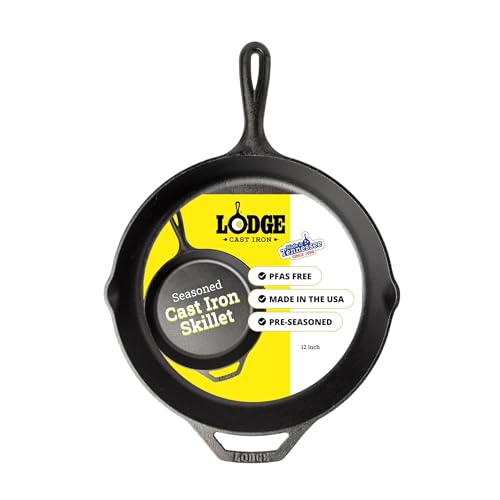
The carbon steel pan

One pan asks for a little care and rewards it with a surface that eggs slide off. The other asks for nothing and will simmer a tomato sauce all afternoon. The choice is about how you cook, not which metal is better.
Tap either one to check today’s price.
The carbon steel pan
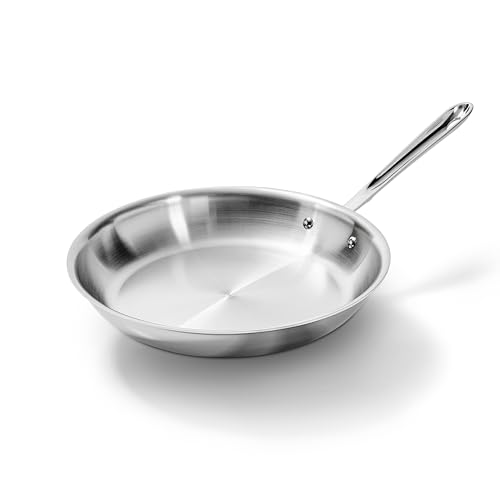
The stainless pan
All-Clad has the edge on 3 of 10 lines, Lodge on 2, 4 even.
| Feature | Lodge | All-Clad |
|---|---|---|
| Seasoning | Required; sold pre-seasoned, and the finish builds with use | None; the surface never changes (the edge) |
| Acidic food | Tomato, wine and citrus strip the seasoning; ATK found a simmered acidic sauce removed most of the patina | Non-reactive; simmer anything (the edge) |
| Searing | Browns deeply and quickly; no top heat limit on an all-metal pan (the edge) | Sears well once preheated; oven and broiler to 600°F |
| Weight, 12 in | 4.2 lb (America's Test Kitchen) | 2.8 lb (America's Test Kitchen) (the edge) |
| Cooking surfaceEven | 9.25 in (ATK measurement) | 9.5 in (ATK measurement) |
| InductionEven | Yes | Yes |
| Oven | Oven, grill and open fire; no limit stated. Remove the silicone holder first | Oven and broiler safe to 600°F |
| DishwasherEven | Never; hand wash, dry, oil | Hand wash only, per All-Clad |
| Price on Amazon | About $55 (the edge) | About $160 |
| Made inEven | USA | USA (Pennsylvania), with global components |
The verdict
Buy carbon steel if you sear steaks, fry eggs and want a pan that gets slicker with use and takes any heat, and you will keep it dry and oiled. Buy stainless if you deglaze, simmer tomatoes and wine, and want a pan that needs nothing but washing. Most kitchens end up with one of each.
The cookware still made in America.The cookware you do not have to wonder about.The stainless skillet that does the real cooking.
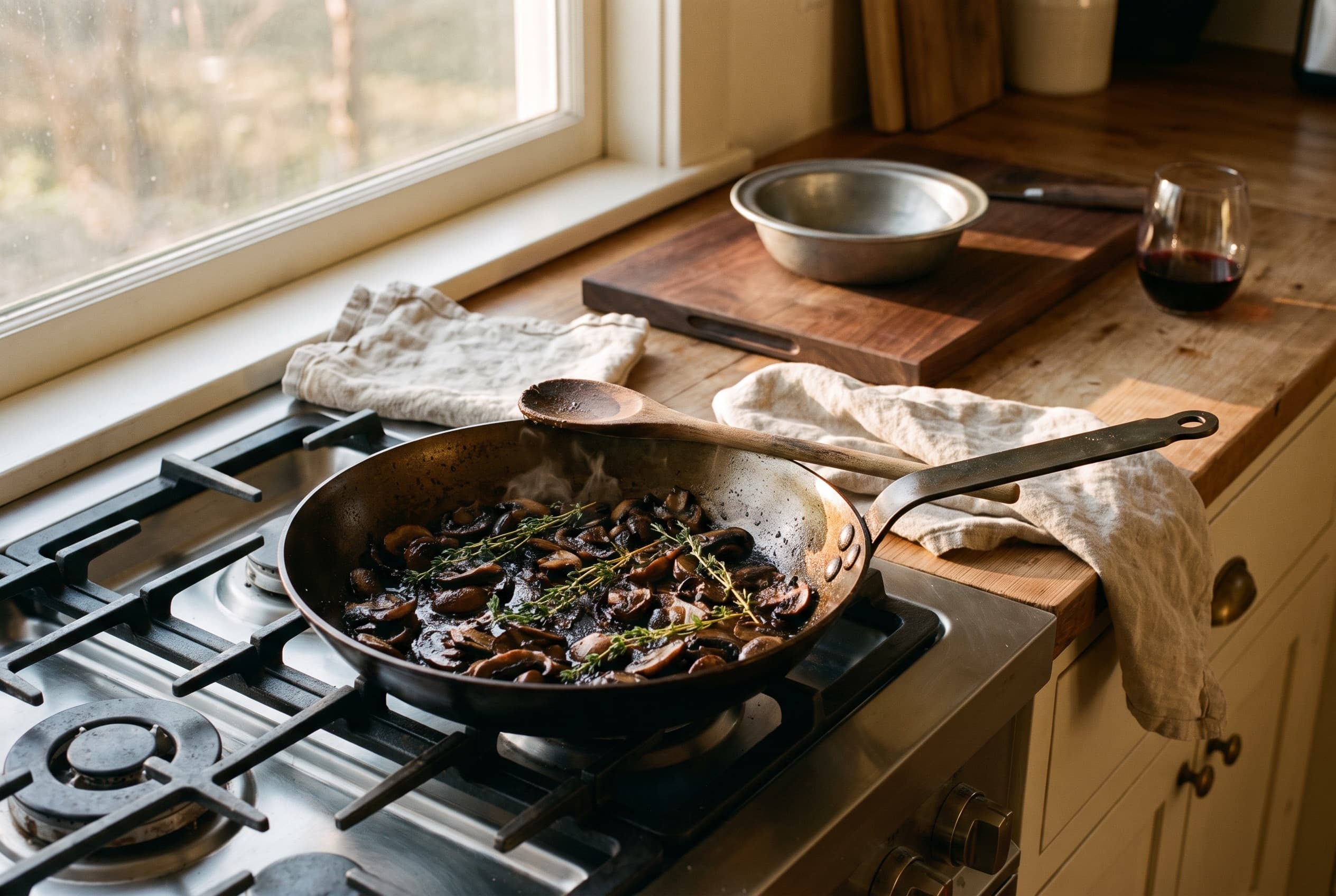
Carbon steel is about 99 percent iron and 1 percent carbon, pressed from sheet rather than cast, so it is thinner and lighter than cast iron and heats faster. It rusts if left wet, and it depends on seasoning: a thin layer of oil heated until it polymerizes and bonds to the metal. That layer is what makes a carbon steel pan increasingly nonstick, and it is also what acidic food strips away.
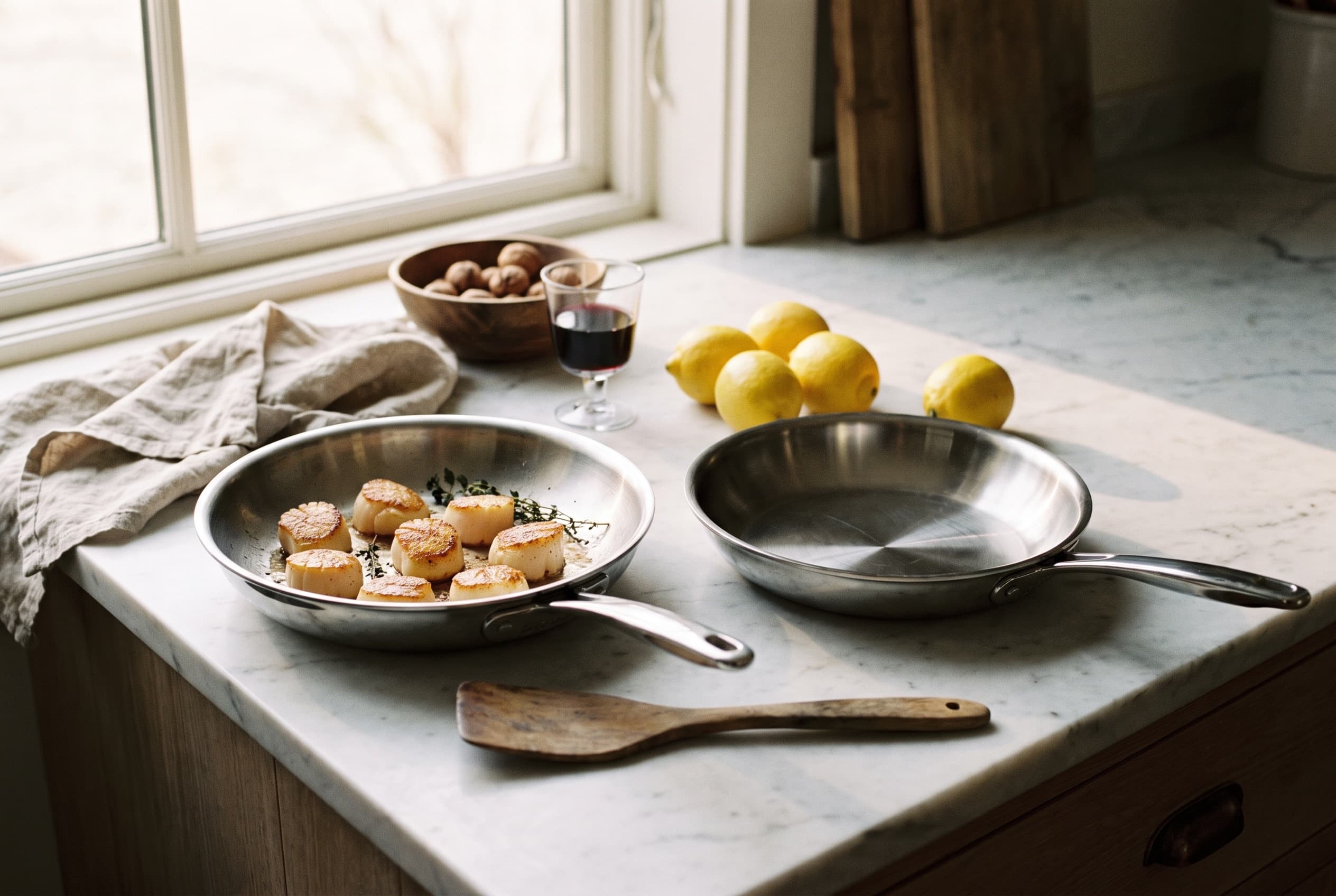
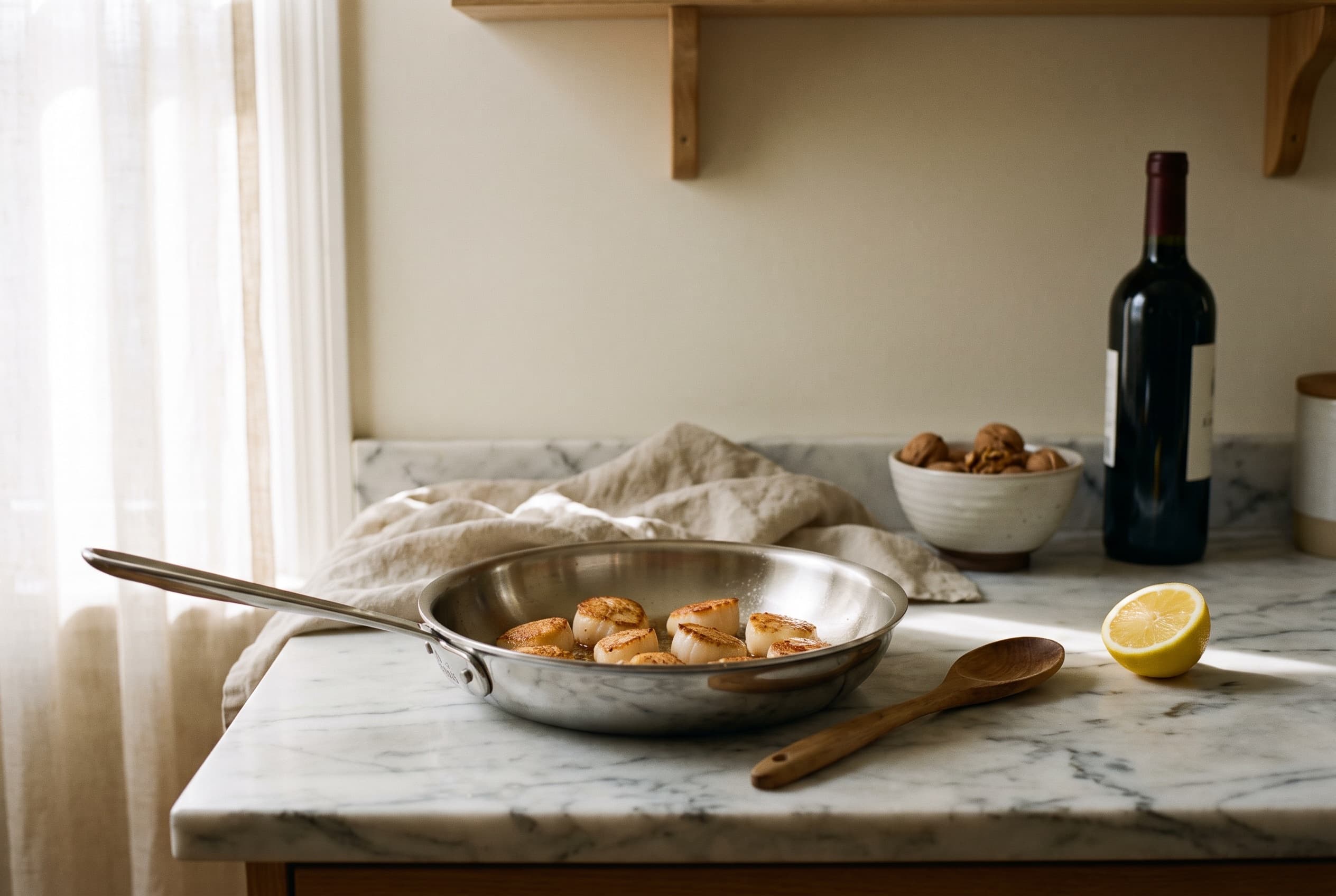
Clad stainless steel is a sandwich: stainless inside and out around an aluminum core. The cooking surface does not react with anything, never needs seasoning, and can be scrubbed hard. Food sticks until you learn to preheat and use fat, and it never becomes as slick as a well-seasoned carbon steel pan. In exchange, it is the pan for pan sauces, braises and anything with wine or tomatoes.
The two pans here are the ones most people should actually consider: Lodge's 12 inch carbon steel skillet, about $55 and made in the USA, and All-Clad's D3 12 inch fry pan, the stainless skillet America's Test Kitchen has put first for years. The Lodge is not ATK's favorite carbon steel pan (that is a heavier, pricier Mauviel), but it is the one sold by Amazon at a price that makes a second pan easy to justify.
The inexpensive American carbon steel skillet: pre-seasoned, induction ready, and happy over an open fire.
Lodge presses this skillet from 12 gauge carbon steel with a riveted steel handle and seasons it at the foundry with vegetable oil, so it arrives with a working finish rather than a bare one. The listing says it suits gas, electric and induction stovetops, outdoor grills and open fire, and that the metal is free of PFOA and PTFE. Lodge's own page adds that it is made in the USA and goes in the oven. The silicone holders that come with it are rated to 500 degrees and should come off before the pan goes in.
America's Test Kitchen weighed the 12 inch Lodge at 4.2 pounds with a 9.25 inch cooking surface and recommended it with reservations: it cooks well for the money, but the testers preferred heavier, more balanced pans such as the Mauviel M'Steel. ATK's broader findings apply here: carbon steel browns deeply and quickly, a fully seasoned pan still needs a little fat, and it can take a year or two of cooking to build a solid black patina.
Care is the whole argument against it. Hand wash, dry at once, rub with a film of oil. Skip the tomato sauce; ATK found that simmering an acidic sauce stripped most of the patina, though restoring it took about ten minutes. Skip the pan altogether if you know you will leave it in the sink.
The catch. Rusts if left wet, loses its seasoning to acid, and is heavier than the stainless pan.
Where to buy
AmazonCheck price →The bonded tri-ply skillet that independent testers put first, and the pan for everything acidic.
D3 is All-Clad's original line: 18/10 stainless inside, stainless outside, an aluminum core, bonded rim to rim. The listing states it is made in the USA with global components in All-Clad's Pennsylvania factory, is oven and broiler safe to 600 degrees Fahrenheit, works on induction and must be washed by hand. America's Test Kitchen named it the winner of its stainless skillet testing, weighed it at 2.8 pounds, measured a 9.5 inch cooking surface and found it resisted warping.
Stainless does what carbon steel cannot. Deglaze with wine, reduce a tomato sauce, braise chicken thighs in lemon, and the surface is unchanged. Nothing to season, nothing to rust, and a scouring pad is fine. The cost is that eggs and fish will stick unless the pan is properly preheated and oiled, and even then it is never as slick as seasoned steel.
Skip it if what you mostly want is a pan for eggs and steak and you are willing to look after it. The Lodge does those two jobs better for a third of the price.
The catch. Food sticks until you learn the preheat, and it is hand wash only.
Where to buy
AmazonCheck price →Two pre-seasoned carbon steel pans from a maker that rates them to 1,200 degrees, sold by the brand on Amazon.

Made In's carbon steel comes pre-seasoned with shea nut and coconut oil, and the listing says the pans handle heat to 1,200 degrees Fahrenheit, work on induction, and are made in Sweden. The maker lists the 12 inch at about 4.3 pounds with a 9.25 inch cooking surface and 2.25 inches of depth, hand wash only, with a lifetime warranty. The set pairs it with a 10 inch for eggs and single portions.
America's Test Kitchen weighed Made In's 12 inch blue carbon steel pan at 4.41 pounds with a 9.5 inch cooking surface and recommended it with reservations, the same tier as the Lodge. It is the pick for a cook who wants two sizes of carbon steel from one maker with a warranty behind them, rather than a measurably better pan than the Lodge.
The catch. Two pans at this price is fair, but neither did better in America's Test Kitchen's testing than the $55 Lodge.
Where to buy
AmazonCheck price →Fully clad tri-ply stainless for the Lodge's money, so you can own both pans for about $100.

Tramontina's Signature pan is 18/10 stainless around an aluminum core with a riveted stainless handle, made in Brazil. The listing rates it oven safe to 500 degrees Fahrenheit, induction compatible, NSF certified, dishwasher safe and covered by a lifetime warranty.
With the Lodge, it makes the two-pan kitchen this comparison keeps arriving at: steel for the sear and the eggs, stainless for the sauce. Both together cost less than the All-Clad alone.
The catch. A smaller flat cooking surface and a plainer handle than the All-Clad.
Where to buy
AmazonCheck price →Seasoning is oil heated past its smoke point until it polymerizes into a hard, thin layer bonded to the steel. Every time you cook with fat, the layer thickens a little. Soap in moderation does not remove it; soaking, scouring and acid do. Tomatoes, wine, vinegar and citrus will dull or strip it, and the pan may give the food a metallic taste while they do. Cook those in stainless.
A stripped pan is not ruined. Scrub off any rust, dry it, wipe on a film of neutral oil, and heat it until it stops smoking. Repeat two or three times and it is back in service.
Bare stainless grips protein at the moment it hits the pan. Heat the empty pan over medium until a drop of water skitters, add the fat, let it shimmer, then add the food and leave it alone until it releases on its own. Done that way, a stainless pan sears nearly as well as steel and leaves the browned bits you want for a sauce.
Carbon steel is lighter than cast iron but not light. The 12 inch Lodge is 4.2 pounds against the All-Clad's 2.8. If you flip food with a wrist flick, or have any trouble lifting a full pan one-handed, that difference matters more than any other row in the table.
Better at searing and at releasing eggs once seasoned; worse with acidic food and with neglect. Stainless is non-reactive and needs no care beyond washing. Neither is better at everything, which is why serious kitchens keep both.
Briefly, yes. Simmering them will strip the seasoning. America's Test Kitchen found a simmered acidic sauce removed most of a pan's patina, with no off flavors, and reseasoning took about ten minutes. Use stainless for long acidic cooking.
Yes. Carbon steel is magnetic. Lodge and Made In both list their pans as induction compatible, as does All-Clad for the D3.
Clad stainless, by a wide margin at this size. ATK weighed the 12 inch Lodge carbon steel at 4.2 pounds and the All-Clad D3 at 2.8.
Stainless, because it cooks everything, including the acidic dishes carbon steel cannot. Add a carbon steel pan second for eggs and searing; the Lodge makes that an easy $55.
 KitchenAll-Clad vs Demeyere: Which Stainless Pan to Buy
 KitchenIs All-Clad Worth It? Compared With a $50 Tri-Ply
 KitchenSantoku vs Nakiri: Which Japanese Knife to Buy
 KitchenThe Best Cookie Sheets and Silicone Baking Mats
 KitchenBest Cutting Board: End Grain vs Edge Grain Wood
 KitchenQuality Knife Sets for Home Cooks: Block vs Three Knives
 KitchenMeat Thermometer Price Comparison: Instant-Read vs Leave-In
 KitchenHexClad vs Henckels Paradigm: Which Hybrid Pan to Buy
The Bonwits Letter
What is worth buying for the house this week, what is actually on sale, and what to skip. Short, and never sponsored.